
Gold price outlook 2025: Gold prices that have climbed over 30 per cent so far in 2024 to Rs 7,300 per gram in the Indian markets (up 28 per cent in dollar terms till November-end), are set for their best calendar year performance in 10 years, suggests a recent report by World Gold Council (WGC). However, this stellar run, analysts believe, may not carry through till the end of 2025 in the backdrop of economic and geopolitical headwinds.

Despite all the noise around India's chance to leverage the China-plus one strategy, India's share of global foreign direct investment (FDI) inflows fell from 3.5 per cent in the first nine months of 2022 to 2.19 per cent in the same period in 2023, according to OECD data. The sharp drop of 54 per cent is much steeper than the overall global FDI inflow decline of 26 per cent in the first nine months. FDI inflows to China have fallen dramatically from a share of 12.5 per cent in the first nine months of 2022 to only 1.7 per cent in the same period in 2023.

In 2022, gold emerged as the top performer among all conventional asset classes with over 14 per cent returns mainly owing to the depreciation of the rupee.

Pakistan was waiting for an opportunity to bring the Jammu and Kashmir issue to the global agenda and resorted to the terrorism route to provoke India, observes Ambassador T P Sreenivasan.

The government is likely to take a call on the timing of LIC initial public offering within this week, a senior official said. The sale of 5 per cent stake or 31.6 crore shares in the country's largest insurer was originally planned for in March, but was postponed in view of the geopolitical tension. The government has time till May 12 to launch the IPO without filing fresh papers with markets regulator Sebi. The official said it would be a tough call to decide whether to go ahead with the retail and domestic investor demand or to wait for geopolitical tension to ease and FIIs to return to market.

Foreign Portfolio Investors (FPIs) selling spree continued as they dumped Indian equity worth over Rs 5,800 crore this month so far on rising interest rates and geopolitical tensions in the Middle East. This came after such investors withdrew Rs 24,548 crore in October and Rs 14,767 crore in September, data with the depositories showed. Before the outflow, FPIs were incessantly buying Indian equities in the last six months from March to August and brought in Rs 1.74 lakh crore during the period.

Among the Sensex firms, Wipro, HCL Technologies, NTPC, Reliance Industries, Infosys, IndusInd Bank, Tech Mahindra and Tata Consultancy Services were the major laggards. IT stocks fell on profit-taking after rallying sharply in the past two sessions. Tata Steel, Titan, Maruti, Larsen & Toubro, ITC and JSW Steel were among the gainers.
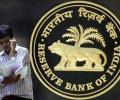
The continuing global uncertainity has complicated the fight against inflation, opined Reserve Bank Deputy Governor Michael Debabrata Patra during the Monetary Policy Committee meeting held on February 8. According to the minutes of the MPC meeting released on Wednesday, RBI Governor Shaktikanta Das also mentioned that there is considerable uncertainty due to a host of global factors such as rising non-oil commodity prices. The RBI on February 8 hiked the key short-term lending rate by 25 basis points to 6.5 per cent, citing sticky core inflation.

Salaries in India are expected to increase by 9.5 per cent in 2024, slightly lower than the actual increase of 9.7 per cent in 2023, largely in response to market dynamics, according to global professional services firm Aon plc. According to the firm's annual salary increase and turnover survey 2023-24 India, that analysed data across 1,414 companies from almost 45 industries, salary increase in India seems to have stabilised at high single digits, after the post-pandemic high increments in 2022. "The projected increase in salaries in the Indian formal sector indicates a strategic adjustment in response to the evolving economic landscape.

The Reserve Bank on Friday retained the inflation forecast for 2023-24 at 5.4 per cent, and vowed to take timely measures to prevent any spillovers of global food and fuel price shocks. Stressing that the Reserve Bank has identified high inflation as a major risk to macroeconomic stability and sustainable growth, Governor Shaktikanta Das said the September retail inflation number may be lower than August and July prints. The headline inflation based on Consumer Price Index (CPI) moderated to 4.6 per cent in first quarter of 2023-24 as compared to 7.3 per cent in the same period a year ago.

Modi also invoked Mahatma Gandhi and Buddha to urge the delegates to draw inspiration from India's civilisational ethos and "focus not on what divides us, but on what unites us."

India's exports to Iran have been falling over the last one year, amid decline in rupee reserves of the West Asian economy. Going ahead, the possibility of augmenting exports to Iran may not be easy for India, considering the geopolitical tensions - Russia-Ukraine and Israel-Hamas conflicts - and the West Asian country's support for Russia and Hamas, people aware of the matter said. Exports to Iran saw a downward spiral since November last year.

American brokerage firm Morgan Stanley on Thursday sharply cut its India FY23 real GDP growth estimate to 7.9 per cent, mainly due to the impact of the Russia-Ukraine conflict on oil prices. Analysts at the brokerage also raised their inflation forecast to 6 per cent - the upper end of the tolerance band for the RBI - and flagged stagflation risks because of the ongoing events. "We believe that the ongoing geopolitical tensions exacerbate external risks and impart a stagflationary impulse to the economy," they said. It can be noted that stagflation involves a stagnancy in output or growth, coupled with high inflation.

Investors' wealth eroded by Rs 7.59 lakh crore on Monday as the equity market took a heavy drubbing amid escalating tensions in the Middle East. The 30-share BSE Sensex plunged 825.74 points or 1.26 per cent to settle at 64,571.88 points. During the day, the index plummeted 894.94 points or 1.36 per cent to 64,502.68 points.

'There is no independently verified imagery or battlefield evidence to support Pakistan's claim.'

After a year's delay due to COVID-19, the 19th Asian Games officially opens in Hangzhou on Saturday with hosts China eager to lift a country mired in economic gloom.

The S&P BSE Sensex tumbled 534 points to close at 25,627.

Pakistan has warned the international community that any military moves by India shall be 'responded to assuredly and decisively... onus of any escalatory spiral and its consequences shall squarely lie with India.' Implicit in the statement is a veiled threat that even a nuclear threshold may be reached if push comes to shove, warns Ambassador M K Bhadrakumar.

Among major Sensex movers, ITC rose the most by 1.70 per cent, Wipro by 1.43 per cent, Tech Mahindra by 1.36 per cent and Nestle India by 1.27 per cent. Other gainers included HCL Tech, Asian Paints and Reliance. On the other hand, ICICI Bank, NTPC, UltraTech Cement and Tata Steel traded with a loss of up to 0.82 per cent.

Quarterly earnings from corporates, global trends, and trading activity of foreign investors will guide market sentiment this week, analysts said, adding that benchmark indices may face volatile trends. "The upcoming release of Q2 results will be closely watched, providing insights into corporate performance. "Meanwhile, the escalating tensions between Israel and Iran introduce a significant geopolitical risk, potentially leading to increased oil prices and market volatility.

On the back of sound macroeconomic policies and softer commodity prices, India's growth momentum is likely to be sustained in 2023-24 in an atmosphere of easing inflationary pressures, said the Reserve Bank's annual report released on Tuesday. It, however, added that slowing global growth, protracted geopolitical tensions and a possible upsurge in financial market volatility following new stress events in the global financial system could pose downside risks to growth. "On the back of sound macroeconomic policies, softer commodity prices, a robust financial sector, a healthy corporate sector, continued fiscal policy thrust on quality of government expenditure, and new growth opportunities stemming from global realignment of supply chains, India's growth momentum is likely to be sustained in 2023-24 in an atmosphere of easing inflationary pressures," it said.

'While my generation carries with it the memory of the Chinese perfidy of 1962, this generation will carry the memory of Chinese perfidy in Galwan.'

While there was no mention of India in the National Cyber Threat Assessment reports of 2018, 2020 and 2023-24, the 2025-26 assessment mentions India -- along with China, Russia, Iran and North Korea -- in the 'Cyber threat from state adversaries' section that introduces the state cyber threat ecosystem and discusses the cyber threats to Canada.

The Reserve Bank on Wednesday projected retail inflation to ease to 5.3 per cent in next fiscal from 6.5 per cent this year on assumptions of lower imported inflation, even though core inflation remains sticky. The RBI's inflation outlook for current fiscal has improved from 6.8 per cent projected earlier, to 6.5 per cent, on the back of steeper than expected decline in vegetable prices and Indian basket of crude at $95 a barrel. "Looking ahead, while inflation is expected to moderate in 2023-24, it is likely to rule above the 4 per cent target.

The Reserve Bank of India's (RBI's) interest rate decision, West Asia conflict and trading activity of foreign investors are the key factors that will dictate investors' sentiment in the market this week, analysts said. Moreover, quarterly earnings from IT bellwether TCS, domestic macroeconomic data and movement in global oil benchmark Brent crude would also guide trends in the market. Worsening tensions in the Middle East and foreign fund outflows were the major culprits behind the equity markets sharp fall last week.

Movement in the equity market this week will largely be dictated by quarterly earnings of blue-chip firms HDFC Bank and Hindustan Unilever, along with the announcement of WPI inflation data and global trends, analysts said. Trading activity of foreign investors, global oil benchmark Brent crude and rupee-dollar trend would also guide the movement.

Pro-Palestinian sympathies among fans have also spilt into stadiums as four Arab teams compete
Foreign portfolio investors (FPIs) have withdrawn over Rs 12,000 crore from Indian equities this month so far, mainly due to a sustained rise in US bond yields and the uncertain environment resulting from the Israel-Hamas conflict. However, the story takes an intriguing turn on observing FPI activity in Indian debt as they have infused over Rs 5,700 crore into the debt market during the period under review, data with the depositories showed. Going ahead, the trajectory of FPIs' investments in India will be influenced not only by global inflation and interest rate dynamics but also by the developments and intensity of the Israel-Hamas conflict, Himanshu Srivastava, associate director - manager research, Morningstar Investment Adviser India, said.

In a surprise development, a top Chinese military general has cast aspersions on the People's Liberation Army (PLA)'s much-publicised 'real combat-oriented exercises' as 'fake combat capabilities' at a time when Chinese President Xi Jinping has ordered it to prepare for 'maritime military struggles' to win wars.
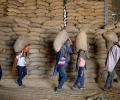
Truck movements across the India-Bangladesh border are on the rise, with increasing rentals signalling a trade recovery between the two South Asian nations. Yet, geopolitical tension looms large, with Bangladesh now under an interim government for nearly two months.

The BSE Midcap and the BSE Smallcap indices pared all intraday gains to end 0.3% and 0.5% lower

Most investors should have a 5% to 10% allocation to gold for diversification. They should stagger their investments to mitigate timing risk.

Domestic equity gauges Sensex and Nifty extended their losing run for the third session in a row on Friday as participants remained cautious tracking other Asian markets amid geopolitical uncertainties in eastern Europe. After swinging about 700 points between gains and losses during the session, the BSE Sensex finally closed 59.04 points or 0.10 per cent lower at 57,832.97. On similar lines, the NSE Nifty edged lower by 28.30 points or 0.16 per cent to settle at 17,276.30.

Gold is usually seen as a safe-haven when stocks are falling or when inflation is rising. With prices of the yellow metal hovering near record highs, people are also putting off their jewellery purchases. Along with a subdued marriage season, the orders with price open and settled on delivery day, too, are getting cancelled. Apart from high, volatile prices, there is no gold rush yet for the safe-haven asset, crimping demand.

The BSE benchmark Sensex plummeted about 383 points to close at 57,300-level on Tuesday, tracking massive selloffs in global markets. After sinking about 1,300 points in early deals, the Sensex staged a sharp recovery but still ended 382.91 points or 0.66 per cent lower at 57,300.68. The NSE Nifty too reclaimed part of its early losses before closing 114.45 points or 0.67 per cent lower at 17,092.20. On the Sensex chart, Tata Steel, TCS and SBI fell the most, losing as much as 3.64 per cent. Of the 30 Sensex constituents, 20 closed in the red. "Escalations in Ukraine tensions with Russia recognising two pro-Russian rebel regions have aggravated the crisis. "The economic consequences are already visible in higher crude and gold prices," VK Vijayakumar, chief investment strategist at Geojit Financial Services, said.

Soured political relations between India and Pakistan have complicated matters
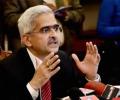
Following are the highlights of the RBI's first monetary policy statement of 2022-23 unveiled by Governor Shaktikanta Das: Policy repo rate unchanged at 4%; marginal standing facility rate & bank rate too remain unchanged at 4.25%. Monetary stance to be accommodative with focus on withdrawal of accommodation to keep inflation within target. GDP growth projection for FY'23 slashed to 7.2% from 7.8%; growth projections based on assumption of crude oil (Indian basket) price at $100 a barrel during FY'23. Inflation forecast hiked to 5.7% for FY'23 from 4.5%.

Market players attribute the rally in small and midcaps to flows from retail investors and domestic institutions.

The Reserve Bank of India on Wednesday retained its growth projection at 7.2 per cent for the current fiscal on the back of improvement in urban demand and gradual recovery in rural India. Unveiling the third monetary policy for the current fiscal, RBI Governor Shaktikanta Das said the Indian economy remained resilient, and the central bank will continue to support growth. The RBI expects growth in the first quarter of the current fiscal at 16.2 per cent, which will taper to 4 per cent by the fourth quarter.

The country's exports edged up 1 per cent to $38.45 billion in December 2023 while the trade deficit narrowed to a three-month low of $19.8 billion, official data released on Monday showed. Imports declined by 4.85 per cent to $58.25 billion in December last year due to a dip in crude oil shipments. The previous low in trade deficit - the difference between imports and exports - was recorded in September at $19.37 billion.
